Sunday, 26 July 2015

Is there any connection between the report of 7th CPC and OROP announcement?


Is there any connection between the report of 7th CPC and OROP announcement?


“Is there any connection between the submission of report of 7th CPC to Central and the announcement of OROP to Defence Personnel?”


The 7th Pay Commission has announced through on its portal last month that the task was given by the Government to the commission will be completed within the time frame and the commission will submit its recommendations before September this year to Central Government.


Some believe that the two reports could be linked.


“The 7th Pay Commission is all set to submit its report to the Government before August 15.”


“The Prime Minister is expected to announce the implementation of OROP in his Independence Day address to the nation.”


According to unofficial sources, the 7th Pay Commission is going to submit its report to the Government before August 15. The fact that the commission has completed its work much ahead of its deadline is indeed commendable. This is the first time in the history of Pay Commissions that a Commission has completed its report ahead of its deadline. Pay Commissions are synonymous with arrears. Last time, 20-month arrears were paid in two installments. If the new Pay Commission’s recommendations are implemented on time, it would be another first – the first to not have any pending arrears.


Click here to read continue...

Expected DA from July 2015 and Jan 2016 – Simple Tool with input of AICPIN


Expected DA from July 2015 and Jan 2016 – Simple Tool with input of AICPIN


Expected DA from July 2015 – To wait for the month of June AICPIN data that will be released on July 31 to find out.


Expected DA from July to Dec 2015


What will the additional Dearness Allowance increase be from the month of July to Dec 2015? One has to wait for the AICPIN data for the month of June 2015 that will be released on July 31 to find out.


Central Government employees are not the only ones who are eagerly waiting to find out what the DA percentage hike will be from July to December 2015. Central Pensioners and employees of the banking sectors too are curious to know. Additionally, the employees are working under state governments are also covered in this circle.


Click here to read continue...

Friday, 24 July 2015

Incorporation of Aadhaar number in PPO Booklet – CPAO Orders


Incorporation of Aadhaar number in PPO Booklet – CPAO Orders


Preparation of list of Government servants due to retire along with their Aadhaar numbers and incorporation of Aadhaar number in PPO Booklet


GOVERNMENT OF INDIA


MINISTRY OF FINANCE


DEPARTMENT OF EXPENDITURE


CENTRAL PENSION ACCOUNTING OFFICE


TRIKOOT-II, BHIKAJI CAMA PLACE,


NEW DELHI-110066


CPAO/Tech/Jeevan Pramaan/2015-16/515 to 662


10.7.2015


Office Memorandum


Subject:- Preparation of list of Government servants due to retire along with their Aadhaar numbers and incorporation of Aadhaar number in PPO Booklet.


Click here to read continue...

Thursday, 23 July 2015

Bonus Issue – Report on detailed discussions and conclusions of 46th ILC


Bonus Issue – Report on detailed discussions and conclusions of 46th ILC 


Removal of Conditions on payment Ceiling eligibility Limits, Decisions to pay Minimum Bonus without linking to loss when the performance indicator satisfy grant of bonus- The major conclusions emanating from the discussions in the committee are as follows:


The Conference committee on amendment of Bonus Act – Removal of Conditions on Payment Ceiling, Eligibility Limits. Decisions to pay Minimum Bonus without linking to loss when the performance indicator satisfy grant of bonus constituted to discuss the Agenda item No. 3 of 46th session of the Indian Labour Conference met under the chairmanship of Captain Abhimanyu, Minister of Labour, Govt. of Haryana. Shri Om Prakash Mittal, General Secretary, Laghu Udyog Bharti (LUB) and Ms. Meenakshi Gupta and Mr. B.B. Mallick, Joint Secretary, MoLE respectively were the Vice-Cheirman and Member Secretary of the Committee. The Committee had the representation of all the stake-holders (Workers’ Group, Employers’ Group and State Government).


Click here to read continue...

LTC advance – 65 days before the proposed date of outward journey


LTC advance – 65 days before the proposed date of outward journey


Period for applying LTC advance


A Government servant can draw the Leave Travel Concession advance 65 days before the proposed date of outward journey.


Indian Railways has fixed the advance reservation period as 120 days excluding the date of journey w.e.f. 01.04.2015 for all long distance mail/express trains as well as Shatabdi Express trains.


Click here to read continue...

Sanction of prosecution of government officials


Sanction of prosecution of government officials


It is stated that total 100,10 & 9 requests have been received against IAS officers, CSS officers & CBI Gr ‘A’ officers respectively.


It is stated that total 66,8 & 6 requests were permitted during the period and prosecution was sanctioned against IAS officers, CSS officers & CBI Gr ‘A’ officers respectively. Year wise breakup is mentioned in the table below:


It is stated that all the aforesaid requests in which sanction for prosecution has been received are still under trial. Hence, there is no input for conviction, acquittal and discharge.


This was stated by the Minister of State in the Ministry of Personnel, Public Grievances and Pensions and Minister of State in the Prime Minister’s Office, Dr. Jitendra Singh in a written reply to a question by Shri Avinash Pande in the Rajya Sabha today.


Source: PIB News


Wednesday, 22 July 2015

Finance Ministry issued orders on upgradation of cities / towns on the basis of Census 2011 for the purpose of House Rent Allowance


Finance Ministry issued orders on upgradation of cities / towns on the basis of Census 2011 for the purpose of House Rent Allowance


The new and revised list of cities & towns has been declared by the Finance Ministry today for the purpose of House Rent Allowance on the basis of Census 2011.


House Rent Allowance to Central Government employees is now calculated on the basis of the population census of 2001. The cities and towns are classified as X, Y, and Z, based on their population. Employees in these towns are eligible for 30%, 20% and 10% House Rent Allowances respectively.


Click here to read continue...

7th Pay Commission contemplates to recommend the Compensatory City allowance again


7th Pay Commission contemplates to recommend the Compensatory City allowance again


Sources said that the 7th CPC may recommend the Compensatory City allowance in its report for Central Govt employees. Upto 5th Pay Commisson, CCA has been granted to all CG Employees and we all know that the 6th CPC has abolished. The NC JCM Staff Side strongly suggested in its memorandum to introduce again the CCA to submitted to 7th Pay Commission earlier. The unconfirmed sources said, the CCA will come with two criteria as granting in the 5th CPC.


Click here to read continue...

Status of Implementation of One Rank One Pension - Minister replied in Parliament


Status of Implementation of One Rank One Pension - Minister replied in Parliament today (21.7.2015)


Status of Implementation of OROP


The principle of One Rank One Pension for the Armed Forces has been accepted by the Government. The modalities for implementation were discussed with various stakeholders and are presently under consideration of the Government. It will be implemented once the modalities are approved by the Government.


Click here to read continue...

Monday, 20 July 2015

PM meets Trade Union Leaders


PM meets Trade Union Leaders


The Prime Minister, Shri Narendra Modi, today met leaders from various Trade Unions, over tea. The meeting followed extensive consultations that these leaders had with an inter-ministerial team headed by the Finance Minister Shri Arun Jaitley, earlier in the day.


The Prime Minister heard the views of the Trade Union leaders on various issues of interest to workers, including in areas related to economic policy, and related laws.


Click here to read continue...

India Working Class Unitedly Demands Change of Policy – Confederation


India Working Class Unitedly Demands Change of Policy – Confederation


2015 SEPTEMBER 2nd ONE DAY STRIKE


INDIA WORKING CLASS UNITEDLY DEMANDS CHANGE OF POLICY


On 26th May, The day Modi Government at the Centre completed one year in office, Workers National Assembly at the Mavlankar Auditorium in the National Capital, New Delhi, in one voice condemned BJP-led NDA Government’s anti worker, anti-peasants, anti-people and pro-corporate, pro-MNC one year’s rule and declared country wide united protests and resistance through General Strike on 2nd September 2015 against these policies and to pursue 12 points charter of demands.


Click here to read continue...

Steps for conducting inquiry in case of allegation of Sexual Harassment – DoPT Orders


Steps for conducting inquiry in case of allegation of Sexual Harassment – DoPT Orders


G.I., Dept. of Per. & Trg. No.F.No.11013/2/2014-Estt (A-III), dated 16.7.2015


Subject: Steps for conducting inquiry in case of allegation of Sexual Harassment


Undersigned is directed to say that during the meeting of the Chairpersons of Complaints Committees with Secretary (Personnel) on the 16 th April, 2015 it was suggested that the Department of Personnel and Training may prepare a step guide for conduct of inquiry in complaint cases of sexual harassment. Rule 14(2) of the Central Civil Services (Classification, Control and Appeal) Rules, 1965 lays down that the Complaints Committee established in each Ministry or Department for inquiring into complaints of sexual harassment shall hold such inquiry as far as practicable in accordance with the procedure lain down in these Rules.


Click here to read continue...

Sunday, 19 July 2015

Retirement Age of Central Government Employees Controversy Begins Again


Retirement Age Controversy Begins Again


Retirement Age of Central Government Employees Controversy Begins Again


“Retirement age for Central Government employees is 60 years now. It was raised to 60 from 58 in 1998(Dopt order), when the then NDA Government led by Atal Bihari Vajpayee”


Last year, there were rumours that the centre was planning to raise the retirement age from 60 to 62. This time, retirement age makes headlines one again that the superannuation age may be decreased to 58.


Click here to read continue...

Anna Hazare Prepares for Nationwide Protests for OROP


Anna Hazare Prepares for Nationwide Protests for OROP


Anna Hazare has announced that he will soon launch nationwide protests against the Land Acquisition Act and for the implementation of OROP.


The government under Narendra Modi is getting ready to make amendments to the current Land Acquisition Act and implement it. The new Bill was presented in the Parliament and passed. But, the upper house hasn’t yet cleared the Bill due to insufficient majority. The Bill has met with staunch opposition from the opposition parties, including Congress, and social activist Anna Hazare.


Click here to read continue...

16 Fascinating Facts About Icelandic History

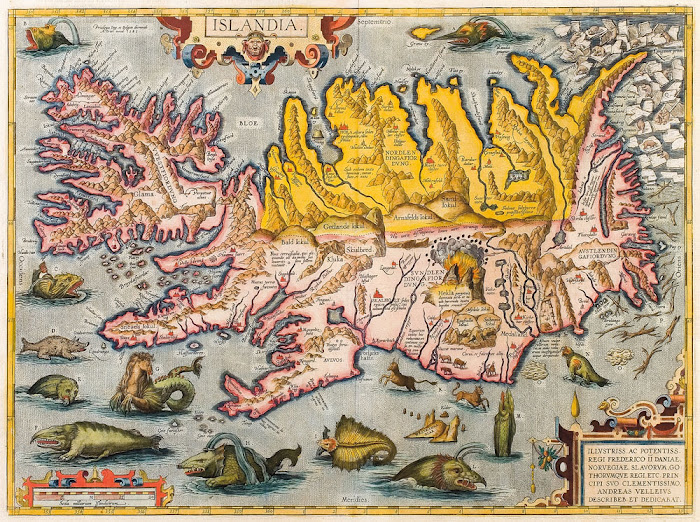
Abraham Ortelius' map of Iceland, ca. 1590

I wrote the following commissioned piece for Come to Iceland, a new tour-booking and information website started up by my friend Stefán Gunnbjörnsson. 

He asked me to write content that had a slightly more interesting edge, so I did my best to add historical and/or little-known details to the articles included in the Nature section of the site. This piece on Iceland's history hasn't been published there yet as the company's still growing, so I thought I'd post it here and encourage you all to visit Come to Iceland and follow their Facebook page, and of course book through them for your next visit to our amazing island.

16 Fascinating Facts About Icelandic History

You thought you'd done you research on Iceland? Well, guess again. Here's a list of fascinating facts that you may have missed along the way:

1. Iceland was originally covered in forests as far as the eye could see. 
According to accepted history, a seafarer named Garðarr Svávarsson sailed around the entire island in the later 9th century and proclaimed that it was "wooded from the mountains down to the sea." 

Currently, about 2% of Iceland is forested. The Forestry Service of Iceland concurrs that at the time of settlement as much as 40% of Iceland was covered in trees. They were destroyed by both natural (volcanic) and human causes.

2. The Norwegian who arrived in Iceland around 870 AD were not first inhabitants. 
There is written evidence that Irish hermits, or papar, had settled the island at least a century earlier, sailing over in their smalll currachs. The story goes that the hermits chose to leave Iceland with the arrival of their noisy new neighbors, leving a number of monkish artifacts behind.

In addition, genetic research has clearly shown that over 60% of Icelandic women are descended from Celtic/British Isles stock, and not Scandinavian, though when and how these women came to Iceland is still up for debate. 

3. Via one Irish princess named Melkorka, it's possible for many Icelanders to trace their lineage to Irish kings as far back as at least 100 BC. 
Via Wikipedia (referencing the Chronicles of Ireland, among other sources) it's possible to click back through her ancestry thousands of years.

Thought to be mute, Melkorka (born around 910 AD) was bought from a Rus trader as a concubine by Höskuldur, one of the original settlers, and bore him a son, Ólafr. When Höskuldur's wife heard her singing to her son, she was confronted and confessed to being the daughter of Muirchertach, an Irish king, who later accepted Ólafr as his grandson.

4. The famed Icelandic sagas were written from 200 to 300 years after settlement era that they describe. 
Interestingly enough, this was the same period when the heavy internal fighting was taking place in the weakening Icelandic Commonwealth. 

There is evidence to show that the writers tried to give the sagas a realistic feel by, for example, dressing the main characters in period clothing as they assumed it was worn centuries earlier. This could be likened to a modern costume drama depicting, for example, the first British settlers to what was to become the USA.

5. Widows had rights and power in Icelandic society. 
Though women were ruled by men, and could by law be given to other men by their fathers, brothers and sons over 16 years of age, strong laws protected them. The Grágas book of laws from the early 12th century details punishments for offenses against women, and it was considered totally dishonorable for a man to violate a woman's rights or body in any way. 

More importantly, when a husband was away, or if a woman had been widowed, she gained rule over the homestead. The Sagas describe women who held behind the scenes power over the men in their lives, though they were not legally allowed get involved in politics or leadership. There are also stories of quite a few women with very active love lives and multiple lovers.

6. Icelandic pagans cut a deal when they finally accepted Christianity. 
When it was (reluctantly) accepted in 1000AD, three concessions to the pagan way of life were allowed to remain: the exposure of infants (they were left outside to die), the eating of horse meat, and the private worship of the old gods. These were all later rescinded, but last two are in effect again.

7. In-fighting amongst powerful chieftains, or goðar, broke up the original Icelandic Commonwealth allowing Norway to take over. 
Both greed amongst the ruling clans and bribery by Norwegian King Hákon caused blood fueds and power plays throughout the Sturlung Era in the13th century. Thousands of men died in battle, resulting in instability that left the island open for takeover by the king. 

So though the original settlers left Norway to create a more democratic society based on rule of law and the vote, it fell apart within 300 years bringing the Icelandic people right back to where they started: owned by a Norwegian king.

8. Two separate, devastating plagues killed half to two-thirds of the population of Iceland in the 1400s. 
Some estimates say that between 20 to 30 thousand people died in that century. First came the Black Plague in 1402, which in the course of two years decimated whole communities at a time. A second, unknown plague arrived in the later century killing off many of the survivors. 

Some records say that people died while carrying people to their graves, and were simply buried along with. Along with the fact that their new ruler, Denmark, (who took over from the Norway) had little need for their fish and wool, Iceland was fast-tracking to becoming Europe's poorest country.

9. For centuries, England and Iceland traded beer for sulfur (among other things.) 
Despite the lack of attention from their Danish rulers, during the "English Era" of the 15th century (and actually well beyond it) English merchant ships sailed to Iceland for goods, mainly stockfish (unsalted, air-dried fish, most often cod) but also wool, saltpeter and sulfur. In exchange they brought items like beer, honey, grains, sugar and fabrics, to name a few. 

In 1509, when Henry VIII gained the throne, his first act as king opened up free voyages to Iceland, 'considering that Fysshe and other Commodities of that Cuntre be muche behovefull and necessarie towarde the comen Weale of this Realme.' This trade most surely kept Iceland going during its harshest times. Henry's daughter, Elizabeth I, 'was not unmindful of the value of Iceland trade,' and it's said that during her reign the native Icelandic sheepdog was popular in court.

10. Almost all clergy and most powerful men in Iceland had multiple wives and many children.
Though absolutely forbidden by Rome, it was common practice for priests and clan leaders to "keep" women and have as many children as possible up to at least the Middle Ages. Their daughters were given to friends as goodwill offerings and as payment in business deals, and according to new research, girls often chose to join cloisters rather than be parceled out as gifts to much older men. 

A recent archaological find in Skríðaklaustur (article in Icelandic) in the east of Iceland found a priest buried with multiple women and children in his grave.

11. After bouncing back from the plague years, a quarter of the population of Iceland died again during the Laki eruption of 1783-84. 
Poisoned gasses and a thick constant ash cloud from the volcanic fissure destroyed nearly all vegetation and killed half of the livestock population (80% of sheep!). As a result, a quarter of the human population (estimated to be at that time around 50,000) died from poisoning and famime in the years that followed. The imapct of the eruption was felt as far away as Egypt and India.

12. In the 1800's a third of the population gave up on Iceland and moved west. 
By now a bleak, deforested, windwept island, Iceland had little to offer its people except more volcanic activity (including the Katla and Hekla eruptions, both located in the populated southern region) and sheep die-offs in the 19th century. 

A massive emigration to Canada and the northern US regions took place, and whole Icelandic communities were created which still exist today. Though nowhere near an easy life, these Vestur Íslendingar understood the harsh winters of the northern praries and were able to make the best out of their new country.

13. The Icelandic language was mapped out for the first time by a Danish man in the mid-19th century. 
Rasmus Rusk was a linguistic genius, having mastered at least 25 languages in his lifetime and written lengthy treatises on many of them, including Icelandic. He based his grammatics on a mysterious book, the First Grammatical Treatise, by an anonymous author of the early 1100's. 

This renewed interest in Icelandic as a unique language helped revive the literary heritage of the people, which had been lost after the era of Saga writing. After the plague, and for the next 400 years, basic survival was the most important thing. Rusk helped to shine light back onto the amazing literary history of Iceland.

14. Romanticism influenced the Independence movement in Iceland. 
The literary Romantic movement in Europe jump-started social change throughout the continent. Industrialization was creating a new middle class who were learning to read and write and to have an influence on the world around them, and poets and painters of the time encouraged a kind of returning to roots and to the land, for average people to retake ownerhsip of what God has given them: their country. 

Young Icelandic men who went to Denmark to study were ccoming home with ideas of independence, and a returning of the land to the Icelandic people who were then to care for it. A quiet but constant revolution took place during the mid-1800's, and by 1874 Denmark granted Iceland home rule. 44 years later, full sovereignty was given.

15. All of the trees in Reykjavik today were planted in the past 130 years. 
Old photos of midtown Reykjavik, including the area around the town lake, are almost completely devoid of flora. Reykjavik itself didn't start to really grow until the late 19th century, so it wasn't until that time that the city planners began to consider planting trees and gardens. A Horticulture Society was established in 1885, and since then has been instrumental in turning the capitol from a barren series of rocky hills into the green and blooming city seen today.

16. The vast majority of products and goods seen in stores today only became available in the last 25 years. 
Until the 90's it was hard to find more than just three kinds of cereal here (Cheerios, Corn Flakes and Coco Puffs.) The only kinds of pasta were macaroni, spaghetti and, rarely, lasagne. There were only two flavors of skyr: plain and blueberry, and only whole milk and undarenna, or whey. The only candy available was local Icelandic kinds and one type of chocolate from Poland: Prince Polo. Small shops were sprinkled all around, and in the neighborhood around Baldursgata, for example, were five shops, a bakery and a fish store until the late nineties. 

The past 25 years have seen a shocking explosion in both imports and local commodities on offer which some people have likened to the consumerization of Eastern Europe around the same time. There are stories of older folk who, until recently, had no clue what a cucumber was, or why a kiwi even existed. The move from a fairly insular welfare state to an international consumer society, as well as the late shift from rural to urban living, has changed the face of the country dramatically. Though hard to believe nowadays, until very recently Iceland was an extremely isolated, and in many ways innocent, culture with a very simple way of life.
Be sure to visit Come to Iceland, and like their facebook page!

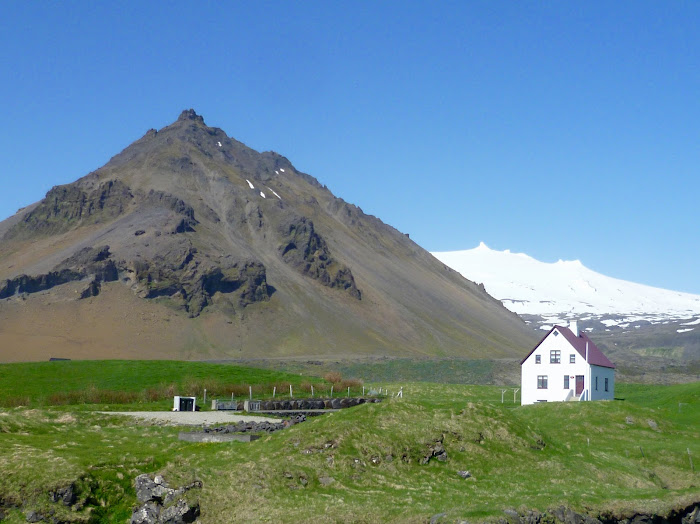
A view of Stapafell mountain from the town of Arnastapi, with Snæfellsjökull glacier in the background.

Friday, 17 July 2015

7th Pay Commission Recommendations has begun to emerge!


7th Pay Commission Recommendations has begun to emerge!


“It doesn’t come as a surprise that even bits and morsels of information about the recommendations, which is being eagerly expected by nearly 50 lakh employees and pensioners, make headlines.”


The recommendations of the 7th Pay Commission have slowly started to make their way to the media in the form of unconfirmed news. The information that was being extensively discussed by all for more than a week now has finally made it to the websites yesterday.


Click here to read continue...

Thursday, 16 July 2015

Expected Date for Submission of 7th Pay Commission Report and its important recommendations – Sources


Expected Date for Submission of 7th Pay Commission Report and its important recommendations – Sources


As the 7th pay Commission itself declared that the work of compilation and finalization of the report is underway, it is the time for expecting the date on which the report will be submitted after it is finalized. The stipulated time for submitting the report is 18 months from the date of notification issued. In a resolution dated 28th February, 2014, Government of India has appointed the Seventh Central Pay Commission comprising Justice Shri Ashok Kumar Mathur as Chairman, Shri Vivek Rae as full time Member, Dr. Ratin Roy as part time Member and Smt. Meena Agarwal as Secretary


Click here to read continue...

NC JCM Staff Side suggested to 7th Pay Commission on House Rent Allowance for CG Employees


NC JCM Staff Side suggested to 7th Pay Commission on House Rent Allowance for CG Employees


National Council JCM Staff Side given suggestion on House Rent Allowance for Central Government employees as under…


The present scheme of HRA is based on the recommendation of the 6th CPC, which is as follows:


Click here to read continue...

Submission of declaration of assets and liabilities by CSS officers – Dopt Orders on 16.7.2015


Submission of declaration of assets and liabilities by CSS officers – Dopt Orders on 16.7.2015


G.I., Dept. of Per. & Trg., O.M.No.21/2/2014-CS.I(PR/CMS), dated 16.7.2015


Subject: The Lokpal and Lokayuktas Act, 2013- Submission of declaration of assets and liabilities by CSS officers – regarding.


The undersigned is directed to refer to this Department’s O.M. of even number dalcd 9th and 23th April, 2015 regarding declaration of assets and


liabilities by CSS officers under the Lokpal and Iokayuktas Act. 2013 and to state that vide Notifications dated 27.4,2015 the last date ror filing of returns by public servants under the Lokpal and Lokayuktas Act. 2013 as on 1.8.2014 and as on 31.3.2015 has been extended to 15th October 2015.


Click here to read continue...

The Auschwitz Bookkeeper

I'm just about to fly off to Warsaw to lead a 2 week holocaust study trip. Therefore sorry for this very rushed flow of consciousness written on my iPhone! I just wanted to react to the Oscar Gröning "Bookkeeper of Auschwitz" case though as it's something I feel very strongly about:

Lots of people are apparently pointing out 1) he has "repented", 2) he came forward voluntarily to challenge holocaust deniers, 3) some are calling this "vengeance" rather than justice; 4) and of course he's extremely old.

They're missing a set of points.

1) and 2) These are relevant in law only to mitigation in sentencing, not to establishing culpability. What matters was whether he committed a crime then, or not. His subsequent behaviour might be admirable (I indeed think it is and he comes across as a good, decent person now) but that doesn't affect his involvement at that time. The court found he broke the law. 

He was facing 3-12 years and was sentenced to 4, ie right at the bottom end of the scale. The court therefore correctly applied the mitigating factors to reduce his sentence. End of debate. Christian bullshit about repentance and forgiveness of sins has no place in this legal discussion. He can take that nonsense up with "God" if he believes in one.

3) criminal law broadly has three  purposes: a) individual prevention of reoffending and rehabilitation, b) societal deterrence, and c) retribution. It's clear he won't be doing this again, so the first point here is irrelevant. In terms of societal deterrence however it sends out a message that even after 70 years those involved in genocide will be punished. Therefore this is good. Finally retribution (or "vengeance") is a relevant element of criminal law. It must not be the only motivating factor, but it does provide valid and necessary comfort to victims and it provides a sense of justice being done more widely. Again therefore this is good. 

4) I remember reading about a friendly Gestapo policeman in Cologne who helped an 89 year old German Jewish woman to her round up point by giving her a lift on the back of his  bicycle. She was deported to a ghetto in Poland where her life expectancy would have been days. Gröning's age now is utterly irrelevant to what he was part of back then, at least in terms of culpability (it might be relevant to sentencing). Old people and babies were murdered. He's had 70 long years of freedom and happiness that was denied to millions.

Another interesting point is the small cog in big wheel discussion. He didn't put people in gas chambers, but without the administration the camp could not have operated. As a book keeper, his exact job was to record the currency stolen from the murdered victims.  In his own words he witnessed the gas chambers and believed that the Jewish children murdered in them represented a danger to Germany because of "their blood". He chose this "cushy SS office job" voluntarily. The court found that the whole site was involved in mass murder, and therefore anyone involved was complicit in it. That's absolutely correct. 

Last of all it is never, ever, our place to forgive. We just literally do not have the standing as the wrong was not done to us. Only survivors can do that, or not, on a personal basis for the wrongs committed against them, and not against the other millions affected.  Our job as a society is to keep the memory alive and for our courts to deal with all these issues in a way set out by law. I therefore really welcome this. He will be accorded dignity and care in prison in Germany, which reflects the civilised society it has now become. The victims had no such fortune.